CAPS System - Definition of School Grades & Phases
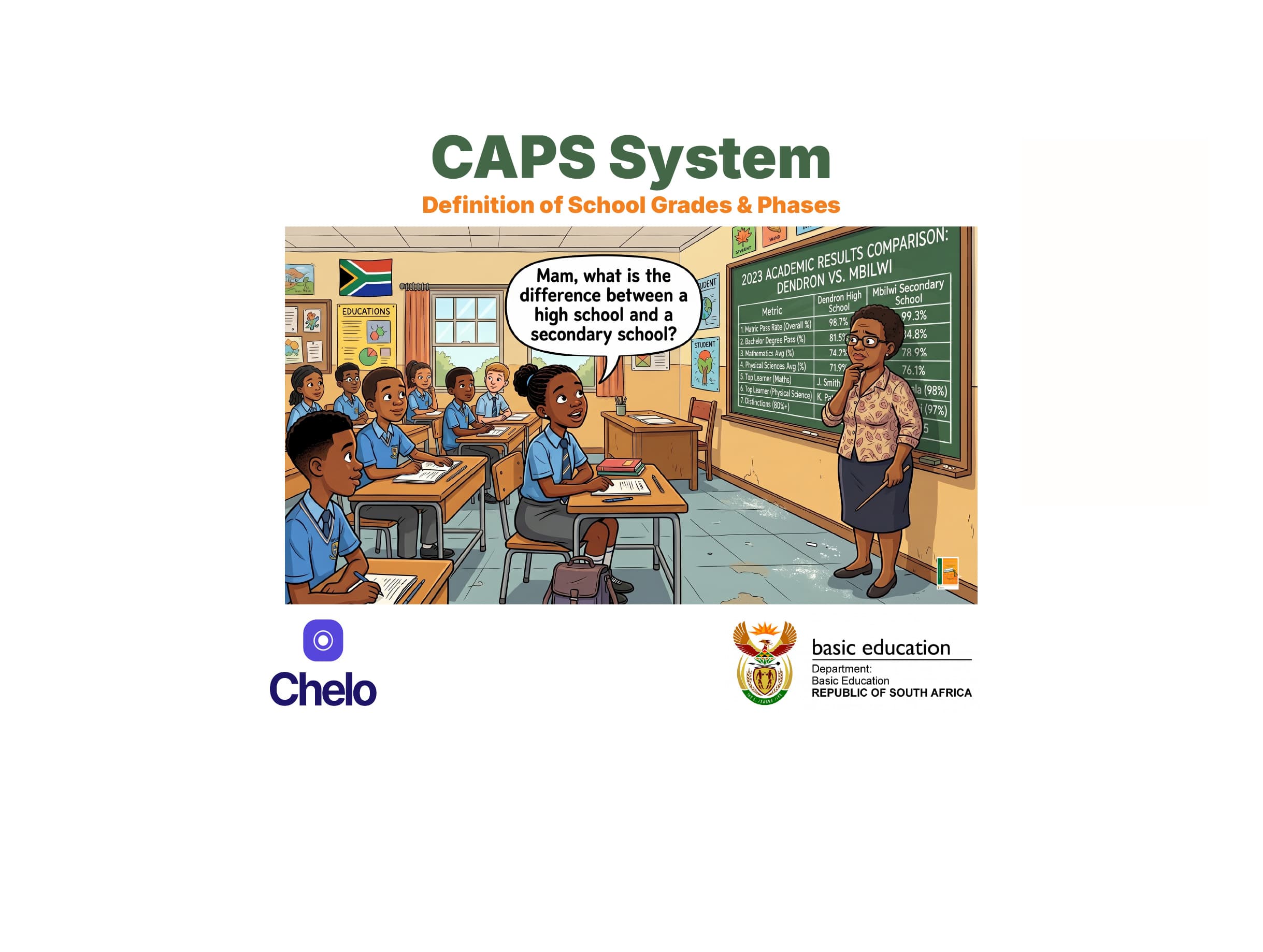
As the first part of a blog series on the CAPS system today we take a look on what school grades are and highlight the difference between a high school & a secondary school.
CAPS System - Definition of School Grades & Phases
The CAPS framework by the Department of Basic Education, is a comprehensive policy standardizing the teaching and assessment of all learners across South African schools from Grade R to 12.
Using the National Curriculum Statement Grades R - 12 (NCS) as a pedagogical foundation to be followed whenever administering education, Grades are defined as "that part of an educational programme which a learner may complete in one year" SA schools act (no. 84 of 1996).
The Four Pillars of CAPS
The NCS divides grade into four main Phases, each with its own focus and assessment standards:
Foundation Phase (Grade R – 3): Focuses on foundational literacy, numeracy, and life skills.
Intermediate Phase (Grade 4 – 6): Transitions learners to more subjects, with a emphasis on formal assessments and reading for meaning.
Senior Phase (Grade 7 – 9): General education leading towards specialized subjects, with higher promotion requirements implemented in 2014.
Further Education and Training (FET) Phase (Grade 10 – 12): Prepares learners for the National Senior Certificate (NSC) examination.
Grades R - 9 are further classified as part of the General Education and Training (GET) band, which upon completion awards a learner the National Qualifications Framework (NQF) 1 level and entry into TVET colleges. Grades 10-12 are classified into the Further Education Training band (FET), which leads to learners acquiring NQF level 4, the National Senior Certificate (NCS) and entry into diploma and degree programs.
The Difference Between High School and Secondary School?
One of the most frequent points of confusion in South African education is the distinction between a secondary school and a high school. While the terms are often used interchangeably, the CAPS system creates a unique academic gap. Looking strictly at curriculum definitions, there is no explicit mention of Secondary schools or of High schools.
The only difference between a High School and a Secondary School is in the etymological origins of the words, with High Schools having an origin from Germanic / old English people, first recorded in 1417 historically meaning: a school providing advanced or higher-level education. Secondary Schools have an origin from latin via old French people, first recorded in 1809 historically meaning: a school of the "second class" or subordinate rank, following primary education.
The main confusion with regards to High Schools & Secondary schools is that Senior phase begins in Grade 7 (Primary school) and ends in Grade 9, which leads to the mistaken differentiation of categorizing grade 7 as the beginning of secondary school while High school starts in grade 8. The modern meaning of the words in a South African Context is the same.
Chelo's Take on Grades
At Chelo, we see this confusion as an opportunity for targeted support to reconcile schools with the outcomes of CAPS. Schools still need to address ineffective methods of teaching by using the CAPS guidelines according to the grade of learners taught. The CAPS system clearly outlines school grades and phases but there still remains gargantuan discrepancies in its implementation in schools, which reflects in the uneven quality of final learner results.
What's Next
To address this, at Chelo we aim to continue helping not only in terms of infrastructural funding, but participating in workshops like the recent SAPA seminar which comprehensively addressed the CAPS policy to teachers and principals.
Join Us
Whether you’re an alumnus, a donor, a teacher, or simply someone who believes in education — you belong in the Chelo community